
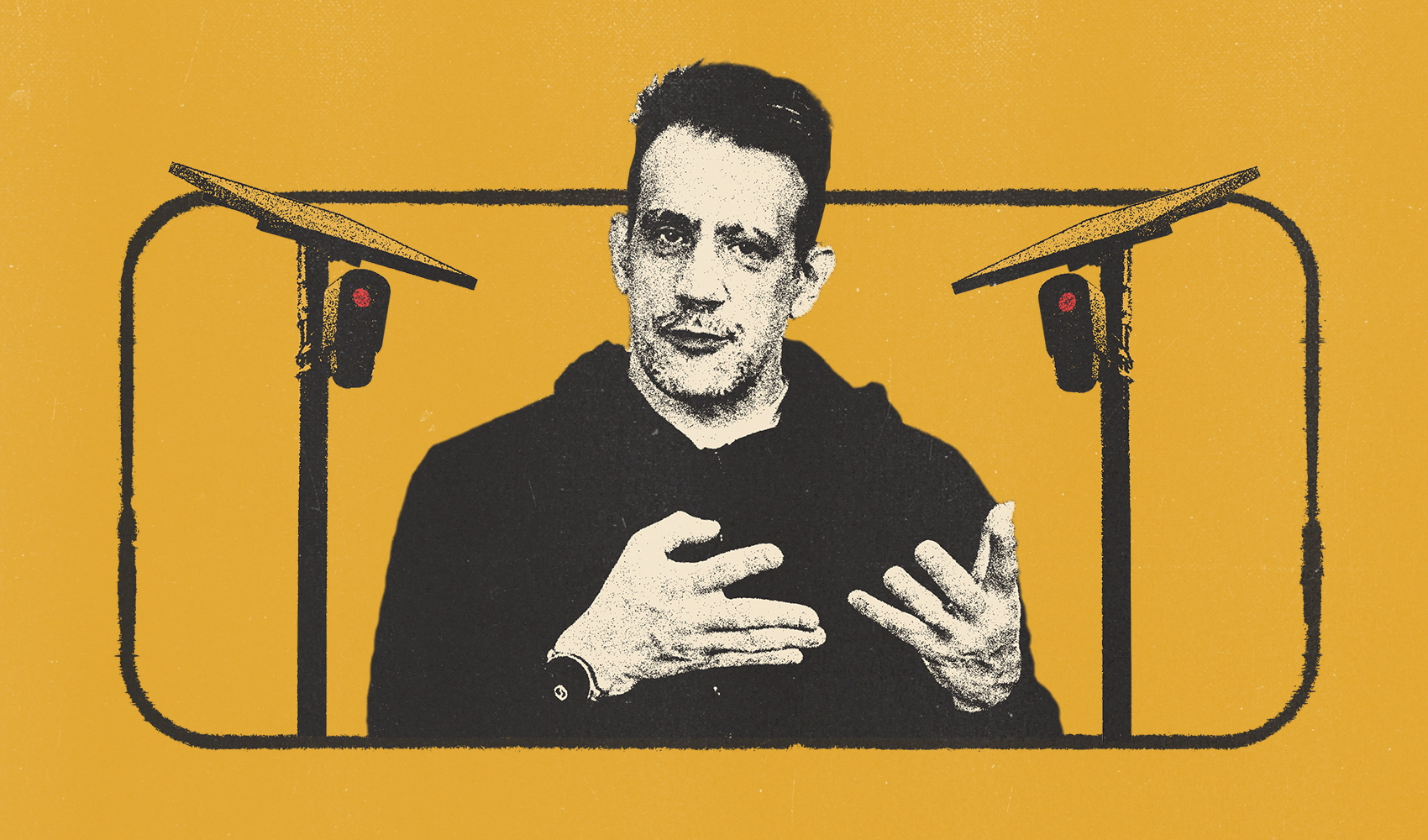
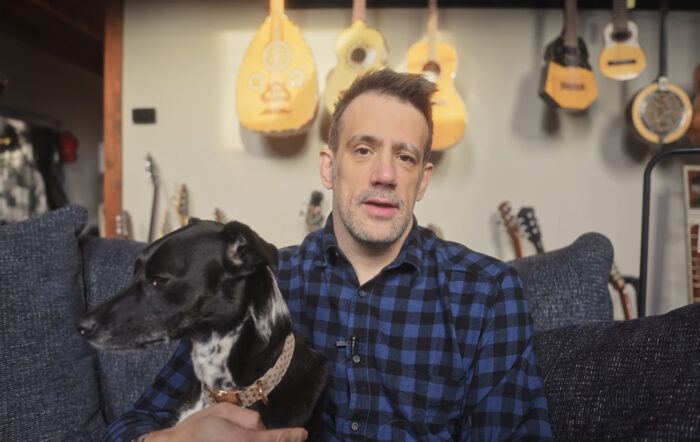
Benn Jordan was already well known in the electronic music scene, releasing work under names such as The Flashbulb and Acidwolf.
In the last few years however, Jordan has amassed an audience of over 1 million YouTube subscribers through videos on acoustic science, critiques of AI, and most recently, the rise and glaring vulnerabilities of new mass surveillance technologies.
Jordan’s most recent video, Gadgets for People Who Don’t Trust the Government, takes several detours to discuss broadly anarchist or anarchist adjacent movements.
Black Rose/Rosa Negra’s External Education Committee (BRRN – EEC) reached out to Jordan for a brief chat on these topics and more.
Black Rose/Rosa Negra – External Education Committee (BRRN – EEC): You’re a musician and audio engineer by trade, what spurred your interest in technologies of surveillance and repression?
Benn: I’ve always been the type of person to take things apart as soon as I get a hold of them, but in this case, I think it was the sheer amount of Flock Safety cameras in the Atlanta area. I’d run a few routine errands and count dozens of ALPRs [Automated License Plate Readers] tracking me throughout my area.
BRRN – EEC: Recently, you made headlines by exposing serious vulnerabilities in the Flock camera systems that are proliferating across cities and towns in the US. Can you provide a (very brief) description of how Flock cameras work, the vulnerabilities you discovered, and what some of the implications of these vulnerabilities might be?
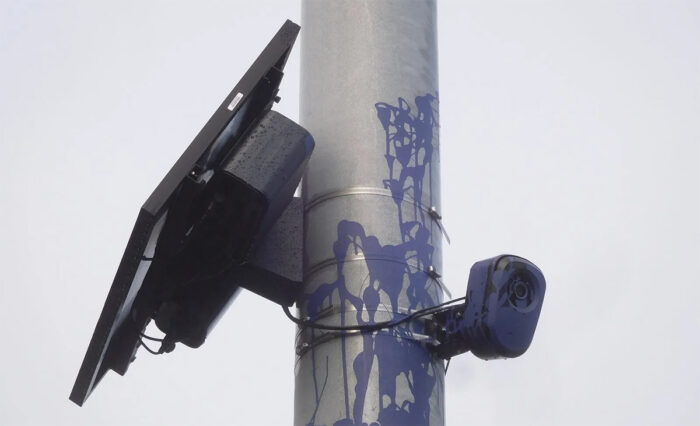
Benn: The older cameras (called “Falcons”) are optimized to identify license plates, read the text on them, and then upload the information and image to a remote server via LTE with a mobile tower. The newer model cameras (“Condors”) are designed to recognize, zoom in on, and follow people as well as vehicles. They then store the video footage and upload them using a variety of methods.
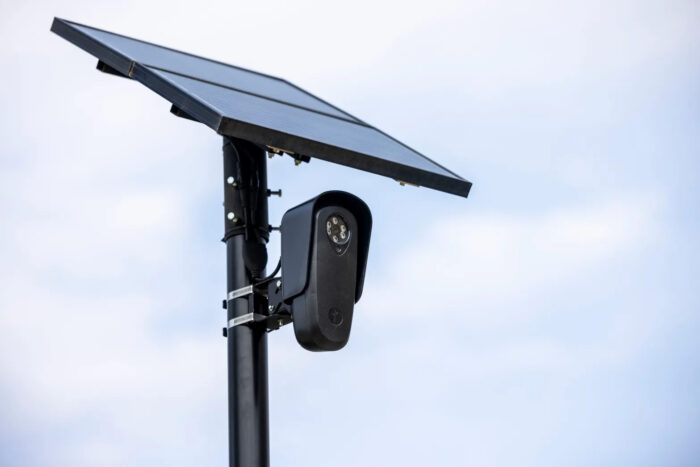
There are a lot of vulnerabilities. I believe over 70 at this point. In my opinion, the most concerning one is that the cameras and compute boxes are unprotected Android devices. I could push a button 3 times on a Falcon and it’ll give me a WiFi access point to connect to. From there, it takes a matter of seconds to infiltrate the device to access the video footage, data, and even some of the server credentials. What’s much worse is that I can “root” the device, which means that I can have control of it outside of the operating system.
From there, you can use your imagination as if you had an always-powered, always-connected Android device to use for whatever you want. You could send the surveillance data to another server, install malware, attack other devices, or even potentially disable the overheat protection on the battery charger and cause a runaway charge to make the batteries explode.
BRRN: In a recent interview, Flock CEO Garrett Langley (yes, that really is his last name) took the position that technology is essentially neutral, stating: “The camera in and of itself is not evil.” Do you buy this argument?
Benn: I do, but in a different way that he’s saying it.
I ran into this type of debate a lot with blockchain. People would call it an unethical scam, or alternatively capitalism’s ultimate state-free messiah. In reality it’s a form of immutable data storage, and as a researcher, it’s my job to keep those literal definitions of technology as my compass. I know a lot of people who are anti-Flock Safety who would’ve wanted surveillance that detected if people were wearing masks during COVID or violating quarantine rules. Garrett is running a unicorn startup, and in my opinion, will say whatever increases his company’s value. When Flock is used to solve a crime, Flock Safety publicly awards themselves credit for it. When Flock is misused or causes a crime, then the technology becomes an agonistic tool devoid of good or evil.
BRRN – EEC: Are you heartened by the decision of some municipalities to reject contracts with Flock?
Benn: Yes! It inspires me to continue poking at things that I may have previously felt were pointless endeavors due to incompetence and hierarchy.
BRRN – EEC: Unfortunately, there’s no “one cool trick” to ensure our privacy, especially as we’re pushed to expose more and more of our information via the internet and our devices. Because of this, all but the most dedicated tend to get overwhelmed and give up on digital hygiene. With this in mind, are there any relatively simple practices you’d recommend for the non-tech savvy to get the most bang for their privacy buck?
Benn: Practice what you preach. I checked into a hotel a few days ago that wanted a bunch of personal information and even a photo of me. I told them to either bypass this stuff or refund my money. Other people in the check-in line were getting flustered, but to my surprise, they weren’t flustered by me being unwilling to share this data, they were flustered that they would be asked to do the same. Putting your foot down regarding your right to privacy tends to be contagious.
Online, I tell people to lie. Give them the wrong age, gender, location, interests, etc. That way, when your online fingerprint gets shared to Instagram or a similar site, advertisers are spending money showing ads to the wrong demographic, devaluing the entire industry of data collection.
BRRN – EEC: Your most recent video at the time of this interview is called Gadgets for People Who Don’t Trust the Government. Throughout the video you include examples of anarchist, or broadly libertarian socialist history. What got you interested in these politics? How do you see the technologies you discuss in the video as interfacing with, or maybe as an expression of the aspirations of anarchism?
Benn: I’ve always had a problem with authority and hierarchy whether it was from the state, a school, an employer, or personal associate. Most of my friends find it annoying and I honestly understand why they do. In that Anarchist Tech video, I really wanted to make the projects as DIY as possible and also not step-by-step instructions. I’d much rather my viewers have an understanding of how to build devices like that rather than a paint-by-number way of making them. That way they can improve on the design and technology, and be inspired to share it to others.
BRRN – EEC: In the 2010s social movements like the Arab Spring and Occupy Wall Street were heralded as so-called “twitter revolutions”, leveraging social media as a powerful means to mobilize people. For movements today, do the risks posed by technology outweigh its potential benefits?
Benn: The thing is, if the Trump Administration starts using facial recognition and license plate cameras to track people to be arrested for politically disagreeing with him, there are over 400 million firearms in the USA that could easily destroy the devices. I do believe that there is a breaking point that will be reached if local governments and businesses don’t start listening to their citizens and customers.
For now, for anyone looking at the situation with my research and videos versus Flock Safety: I’m operating within the law and completely transparently. Flock is literally sending misleading emails to law enforcement, intentionally misrepresenting statistics to municipalities, and threatening journalists and security researchers. If you showed all of this back and forth to a 3rd party who had never heard of it before, who do you think they’d see as the “good” or “evil” sides?
If you enjoyed this article and are interested in learning more about anarchism, we recommend starting with our introductory page on the topic. Want to learn more about Black Rose/Rosa Negra and what we do? Read our program, Turning the Tide: An Anarchist Program for Popular Power.